Browsed by
Category: Blog posts

Working with export control

Working with export control

Working with the RM12 Engine is inspiring! I have now had the pleasure to work with the RM12 Engine for about four weeks and it feels like the pieces are slowly starting to fall into place. I am mainly working on two different projects related to the RM12, export control issues and Spare part optimization. I have mainly been focusing on the export control issues, which is an area that I am totally unfamiliar with. This of course makes it challenging but also simultaneously very inspiring to explore. My coworkers are doing their best to help me understand these processes by supporting me with necessary information and guidance.

So what is export control then? Export control is related to products with the potential to be used in applications that are designed or modified for the space and military industry, dual use products, products which may be used to manufacture weapons of mass destruction and those with suspicion to be used in embargo countries. This basically means that products or information related to these products cannot be exported without permission from the supplier’s country of origin. For instance, you are not allowed to convey information to your supplier related to specific a product without having a specific license in place. The same applies for physical transportations. You may not perceive this process as extensively complex, but its rather dynamic as classifications changes due to the Obama Export Control Reform, new products are introduce and licenses needed to be updated.

My task is initially to map all products regulated by export control and the product classification in order to visualize which license these products needs to be exported under. The classification information is possessed by the supplier. I will also take part in creating export control user training for employees within the Military Value Stream. On top of this I will “walk the process”, from order to delivery, in order to obtain a holistic view of the “export control process”.

I can also gladly announce that the planning process for the second activity week is completed 🙂 We are going to visit Snecma, France and Fokker (recently acquired by GKN), Netherland. You will get more details about this trip in the near future 🙂

Take care!
Life as a Process Engineer

Life as a Process Engineer

After this week I’ve done four weeks at my “home department” and I have the great honor of working with the process engineers that are working with the manufacturing processes at our suppliers. The engineers are responsible for different fields such as casting, forging, welding and unconventional methods. These weeks I’ve been given an assignment to perform which is mainly executed in the material laboratory, which is very good since I get to know that department too as well as I’m getting to learn about the materials used here at GKN. This also means that I’m spending a lot of time together with Mikael that is the graduate engineer at the Materials laboratory. Parallel to this assignment I get to accompany the process engineers to different meetings regarding their work. As a process engineers you work a lot with both product development and with the Supply Chain organization. I learn a lot of new things every day and I love it, even though I have to be honest with you and admit that I am so tired every night, it is tiring to learn new things. At this point I have two weeks left at my department before new adventures lies ahead and I already looking forward to get back here after next summer!

Next time you’ll hear from me will be in four weeks and I will have moved over to another department due to our rotation within the company.

Hello!

Hello!

The days have turned into weeks and it goes faster and faster.

I am working in a department controlled by the Director Financial Reporting & Treasury. It is really a great “eye opener” in terms of the company’s finances, businesses, customers, and how everything is connected internally and externally.

Because it is very broad and comprehensive department, this has enabled me seen how we pay our salaries, pensions, how we manage our cash flow, how we qualify suppliers, how we work with credit to customers and how we collect debt funds etc. There are a variety of financial solutions for this. Before I started as a Trainee, I have worked in the workshop and when I was finished with a detail that then where sent to the customer, we used to say that now it is sold. Really, it’s not. When you go to the grocery store you pay the goods immediately and then you go. However, at GKN you do not know when you will get paid, the uncertainty is not so good for many different reasons.

Private persons know each month that they will get their salary at a specific day XY and adapt purchases accordingly. If you are playing with the thought that you do not know when you will get your salary next year. How would you plan your finances when you must pay the rent, book a trip, buy food or other investments? Difficult right. The same is for us at GKN, but it is the reality.

By spending time here dealing with all the different GKN Aerospace function finances and get an understanding of how it is to run larger companies, difficulties, opportunities and what type of work required. I am very happy and I am fortunate to be able to sit here even on my next rotation even though formal work in another finance function.

I have also a cross-function assignment between finance and commercial, through a “Continues improvement initiative”, which is decomposed from our strategies to increase competitiveness in the future. All our initiatives in all areas of excellence are in a so-called “Obeya Room”. More precise this is about increasing our forecast accuracy for our RRSP (Risk revenue sharing partner) contracts. For those of you who are interested in strategies to some extent try to read annual reports, these documents are filled with interesting information, markets, strategies, future within various industries and so on. More than economic data, as many believe.

Within a few days, a major bank are invited here to talk about risk management and business structures for dealing in South – South East Asia. I have been on many similar meetings through my education and I spent 1.5 years in Asia. They usually talk about the state of macro / micro economics and general matter. It will be interesting to see the difference on a company visit where the bank wants to sell their knowledge and support. Can one imagine that the Bank will respond to the question “what kind of support do GKN need in order to do business in these markets?” And of course have an answer to that.

As of today, the acquisition of Fokker through after legal process is done. It is an exciting addition with about 5,000 new employees, 21 new sites in nine different countries.

On Saturday I go to Prague and meet up with friends from my exchange in Switzerland, they come from the UK, France and Belgium.

#The only financial trainee in the group
#Combustion Engine Mechanics 7.5 credits
#Fokker Purchase
#Soon another trainee trip
# Exhibitions

Prolonged rotation with focus on the material flow

Prolonged rotation with focus on the material flow

The global project within manufacturing engineering, as I mentioned in previous post, is proceeding according to plan. To create opportunities and to improve the robustness of our processes, we need to secure knowledge and therefore a number of courses have been available for the entire Manufacturing Engineering function this week. As part of the global project, I have been part of a planning team whose aim was to plan the training week. Courses that have been offered are, for example, statistical process control, problem solving and risk analysis just to name a few. I had the opportunity to attend several courses. The courses contained both theory and practical exercises.

During the trainee period, the plan is to gain knowledge in new product introduction and to work as a manufacturing engineer after the trainee period. The first rotation was supposed to only be in my home department that is responsible for new product introduction. But that is not the case anymore. I will now be involved in the product’s entire material flow from supplier to finished product, and will have one 12 week shared rotation at my home department and the supply chain department. This is to gain an understanding of how we manage the supplier network and how the material flows from suppliers to GKN Aerospace in Trollhättan and how we then manufacture the product before delivery to the customer. At the supply chain department I will work with supplier quality assurance because some suppliers have difficulty supplying components to the right quality and/or quantity. Therefore, we need to develop a plan to ensure what needs to be done at the suppliers to get the desired outcome.

More about my different projects will be available in following posts.

Sustainable metals for a better world

Sustainable metals for a better world

Today’s consumption-oriented economies are fueling the demand for natural resources at the same time as  the ongoing globalization enable cross-border trade of these. This has led to great economic opportunities for developing countries that possess generous land reserves through export of for example rare metals. However, this development has not only led to positive consequences, but has also contributed to environmental and social problems. Therefore, companies such as GKN have an important commitment to ensure that procurement of materials like these takes place in controlled and sustainable manners.

Through my projects within the purchasing department, I have got an understanding of what variables that are important when choosing suppliers. Criteria such as capabilities, abilities and quality are obviously among the most important ones when choosing a supplier, but there are other aspects that are important as well, such as the supplier’s work on sustainability issues. The concept of sustainability includes social, economic and ecological sustainability, where some aspects are regulated by laws, while others are controlled by company-specific values. Common to all three is that they are all important in order to sustain an attractive community also in the future.

Because GKN Aerospace is using several different alloys, there is a wide variety of metals in our products. From a sustainability perspective, it is important that the origins of these metals are checked to ensure that they come from suppliers that conform to the sustainability requirements. I’m currently working on a project within this area, namely in a project regarding conflict minerals.

Conflict minerals is the name of a group of metals (tin, tantalum, tungsten and gold) that are extracted in the DRC region to finance ongoing conflicts. This financing should obviously be stopped by decreasing demand of these conflict metals. This requires that companies that are buying tin, tantalum, tungsten or gold, make sure that these do not come from an organization that supports the military groups in the DRC area. This is done through mapping the value chain and investigating the origins of the metals that are used. This will reveal if any metals are sourced from a company that is supporting the conflict in the DRC, and changes can be made if necessary.

It feels both interesting and important to work on this project as it is not only important for the company, but is also important to keep the world sustainable.

School and blog visitors

School and blog visitors

What a day! We have student visitors from Linköping University and the blog has thirteen thousand five hundred subscribers. The students are here for a concluding part of a course (Turbine engines), and to present their projects. Together, we’ve also had a guided tour of the production, talked about the company and our work here in Trollhättan and fikat with engineers.

ps_pro
Happy about the visitors (ms paint disidentification B-])

What was I about to write? Oh yeah! The number of subscribers of the blog has reached the astrological sum of thirteen thousand five hundred! Subscribers are, as we understand it, followers of the blog who opted to receive email every time a new post is published. Although the number is hard to grasp, we’re very happy that so many people showed interest in the blog, during the few years it’s existed! Thank you for subscribing, reading and/or caring!

/Mikael

What’s up in the materials lab?

What’s up in the materials lab?

Last week, the upcoming five and maybe for the rest of my career, I’ll be located in the materials laboratory, my “home department”. During my studies in materials engineering, I often got questions about what my work would be like once finished. As I typically answered: I’ll be cutting up metals, grinding metals or looking at metals, I feel it’s time to explain the work in more details, for anyone interested. So, what are we doing?

sprak
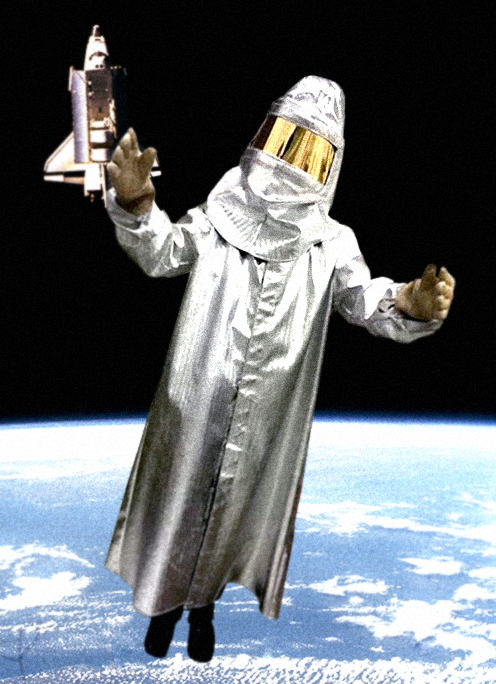
Exciting work in the lab (rarely includes space travels)

My story may be a bit focused on metallography, since it’s what I’m doing right now, but I’ll try to include something brief about the rest of the activities at the department. The materials lab (informally the name of the department) mostly receives components and samples in need of examination from the producing units. The chemistry lab gets samples of process fluids, such as coolants from mechanical processing or etching baths, while the metallography lab deals with whole components (replica testing), segments of them (destructive testing) or process samples. Some of the metallographic work is shared with a smaller lab connected to the preparation of thermal coatings, where components get their hard, soft or corrosion resistant surface layers. Sometimes, samples from mechanical testing that have gone through experiments to obtain material data, arrives at the lab.

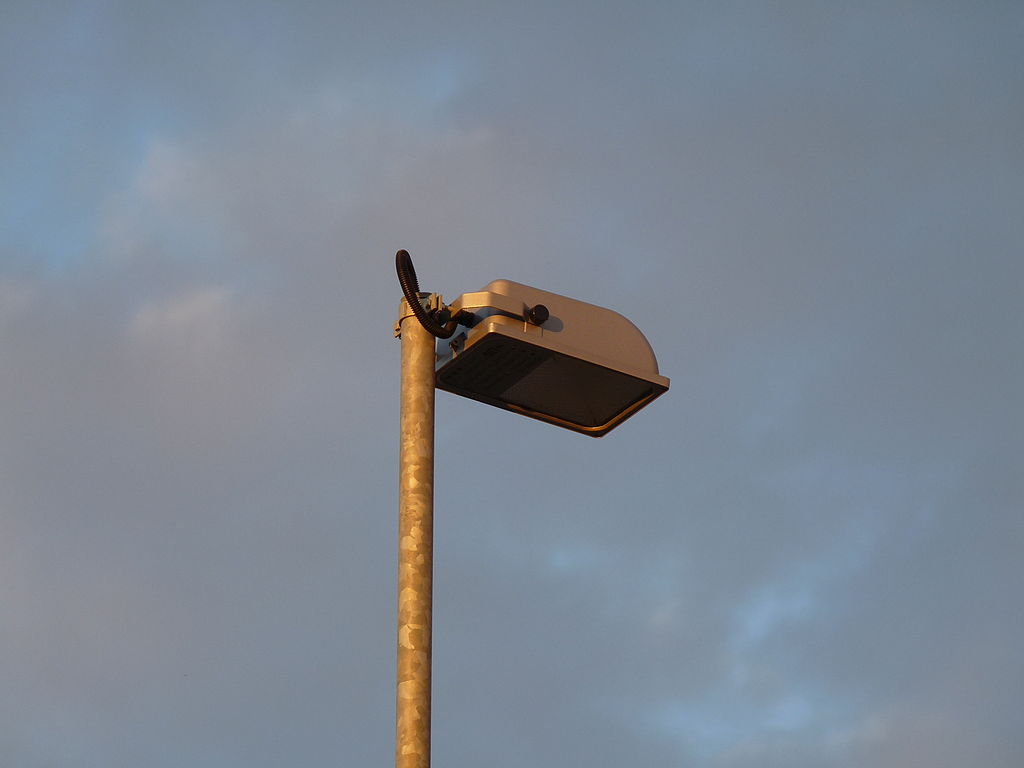
In the metallography lab materials from different production processes are evaluated to make sure everything went as expected. What are we looking for? Metallic materials consist of crystals (!), usually many but may in the aerospace industry be a single one, which greatly influence the properties of the product. Such crystals can be seen on galvanized lamp posts, as angular shapes of different shades. In most cases these are microscopically small (not the lamp posts) and you’ll need instruments to see them, for instance a microscope. The size and chemical composition of the crystals can be altered through alloying elements (ingredients in the metal), heat treatments and processing. If you can assess the microstructure, you can control if the production had been proper. Often sample preparation (as cutting, grinding and etching) is required to develop the right features for the examination.

1024px-Searchlamp_adapted_to_lamppost
An ordinary lamp post (patterned with crystals from galvanization :O)

Defects, like cracks and pores, may also be studied, since they determine how the material will perform or not. In the latter scenario the cause of component failure can be investigated (fractography). Surface layers, desired from thermal coating as well as unwanted, created in heat treatments, are also checked.

As you see, there’s a wide variation to the jobs at the lab and a lot of different analysis techniques available at the department. Whether it’s hacksawing away on a metal sheet or a microscopy assessment, I really enjoy my job and I’m looking forward to learning much more in the field! Thank you, dear and diligent reader! I’ll keep it shorter in posts to come!

Have a great day!

/Mikael


Ready for new challenges!

Ready for new challenges!

The time is here for me, Sofie, to debut here on the blog. Unlike my other trainee colleagues I work within the space propulsion here at GKN. GKN is part of the European space program and is responsible for the technical development and manufacturing of the outlet nozzle and the two motor turbines for the Ariane launchers. I spent my first workshop experience in the space workshop where parts are manufactured, assembled, welded and becomes a final product. During my weeks I was able to follow the whole process (deburring, assembly, welding, cleaning, penetrant, radiographic, measurement, control and production engineering), with a focus on the series production exhaust nozzle of the Ariane 5 rocket.

 © 2014 ESA-CNES-ARIANESPACE
The nozzle in the middle at the bottom of the rocket is made in Trollhättan. © 2014 ESA-CNES-ARIANESPACE

Ariane 5 is launched 6-7 times per year from the Guiana Space Centre located near Kourou in French Guyana. The exhaust nozzle currently manufactured here in Trollhättan is the nozzle in the middle at the bottom of the rocket, see the picture above. Although it looks very small on the picture it is in reality more than 2 meters high, 2 meters in diameter and weighs 450 kg! But compared to the rocket which is 50 meters long and have a total weight of 780 tonnes, it can easily be perceived as a very small detail.

Some fun trivia about the nozzle is that it has about 700 separate parts which are assembled here in Trollhättan and that each nozzle has 3 km of welding! The application area of the nozzle is very special and the circumstances which it is exposed are extreme. The operating temperature of the flame coming out of the nozzle is 3500 ° C and the active cooling of the top of the nozzle has a temperature of -250 ° C. To be able to design and produce a nozzle that can handle these challenges are very impressive! Something that I understood during the time in the workshop was what an incredible craftsmanship the manufacturing process is. Many operations are performed manually with an extreme precision and pride of the operators of the work done is more than well deserved. Working with special and challenging products, it is easy to understand why many of the guys (where are the girls one might ask) in the space workshop have worked there in many years. I would like to send a big thanks to everyone who took care of me and showed me your specific areas during my weeks in the workshop! I have just started my first period of rotation within production engineering in space propulsion; I will tell you more about that in future posts.

Finally, I turn to those of you who are about to begin your thesis. We continuously uploads exciting new theses under the tab “thesis” here on the website and I know that more is coming. If you are interested in doing a thesis in an incredibly exciting area do not hesitate – apply! Do you have any questions or concerns, please contact me (Sofie.Helmersson@gknaerospace.com) or Linn (Linn.Efsing@gknaerospace.com) and we’ll try to help! Do you have a specific interest or area that you want to do a thesis in please contact us so we can forward your request to the right person.

So it begins…

So it begins…

After a week full of activities such as field trips, professional development sessions and a lot of time spent in the car, all the graduates’ engineers have found their respective department. The first four weeks have been amazing but also very intense with a main focus on getting to know the group and to increase its chemistry essentially through many great activities in parallel with creating a general understanding of the overall business here at GKN.

I intend to devote my first blog post to outline the international graduate program (GKN International Graduate Program) which I and Daniel Pelvén are participating in. It is actually the first time that GKN are recruiting candidates for the international program from Sweden since the acquisition of the location in Trollhättan. The duration of the international program stretches over a 5.5 year period unlike the local graduate program in Trollhättan which runs over 1 year. Our journey is also different given the holistic focus of the program as we are given the opportunity to perform in several different operational areas of GKN.

The program begins with a six-month assignment at my home site (Trollhättan) where you participate in one or several projects within a specific function. This is followed by two additional six-month periods in an English-speaking country which then ends with two longer 2-year periods, which can basically be spent anywhere the world (great opportunity).

I will conduct my first six months assignment at the department of Military Engines (ME) with a primarily focus on the RM12 engine which is powering the current JAS Gripen military aircraft. You will be able to read more about my journey and current project in future posts, but until then,

Have a safe flight!

Photo: Copyright Saab AB